Build confidence in everyday Finnish through real conversations and practical situations. Small live online groups for adults who already know a little Finnish and want to start using the language more naturally.
Use Finnish while you learn it
Often, Finnish is taught as something that must be memorised before it can be used.
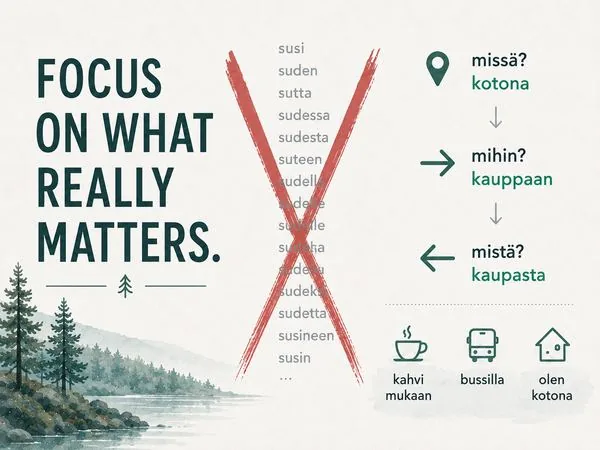
But Finnish is not just a list of endings, it is a system and the endings do matter, but that does not mean everything needs to be memorised before you can speak.
When Finnish starts to click
Many learners discover that Finnish starts to feel much easier once the focus shifts from memorising individual forms to understanding patterns, structure, and how the language behaves in real situations.
It absolutely can be learnt.
Learn by understanding the system
The focus of my teaching is simple: understanding how Finnish is used in real life situations.
Not just what words mean in isolation, but how conversations move, how situations affect language, and how meaning is built naturally between people.
By using real-life situations & dialogue
In my lessons, everything is built around real-life situations and structured dialogue. The language is always introduced how it is actually used in real situation, not through abstract examples or disconnected vocabulary…(see more).
The words and structures appear inside real-life situations so that they stay relevant and therefore are easier to remember and use. The vocabulary starts to build (often like magic) when the learning is tied to something real and you can use it straight away. In contrast, random word lists or abstract characters, rarely lead to usable language. By working through real-life dialogue, the language has space to breath and build naturally. I feel this plays a huge part in opening up the mind to learning and absorbing any new language.
Grammar in context
In the lessons, grammar is always introduced through context, never as isolated rules. It appears exactly where it is needed within a situation, so it can be understood and retained…(see more).
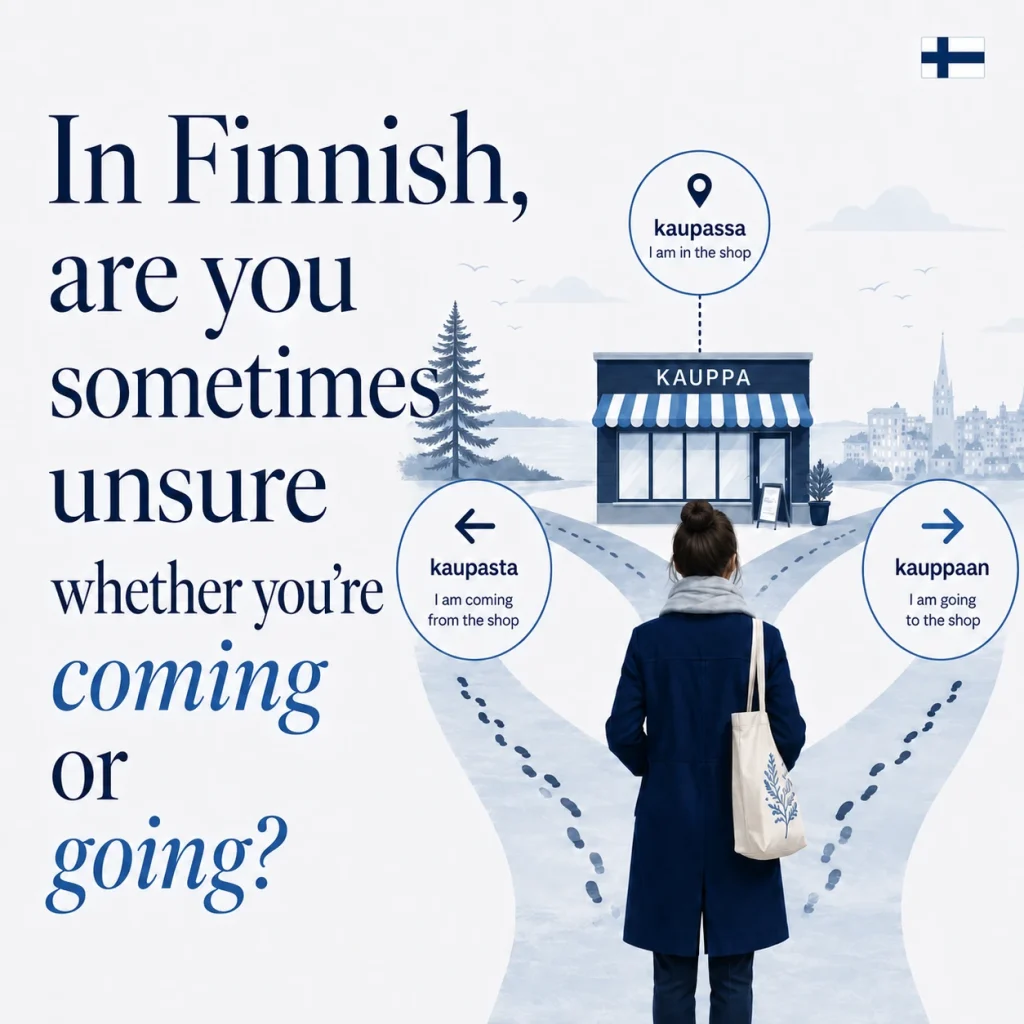
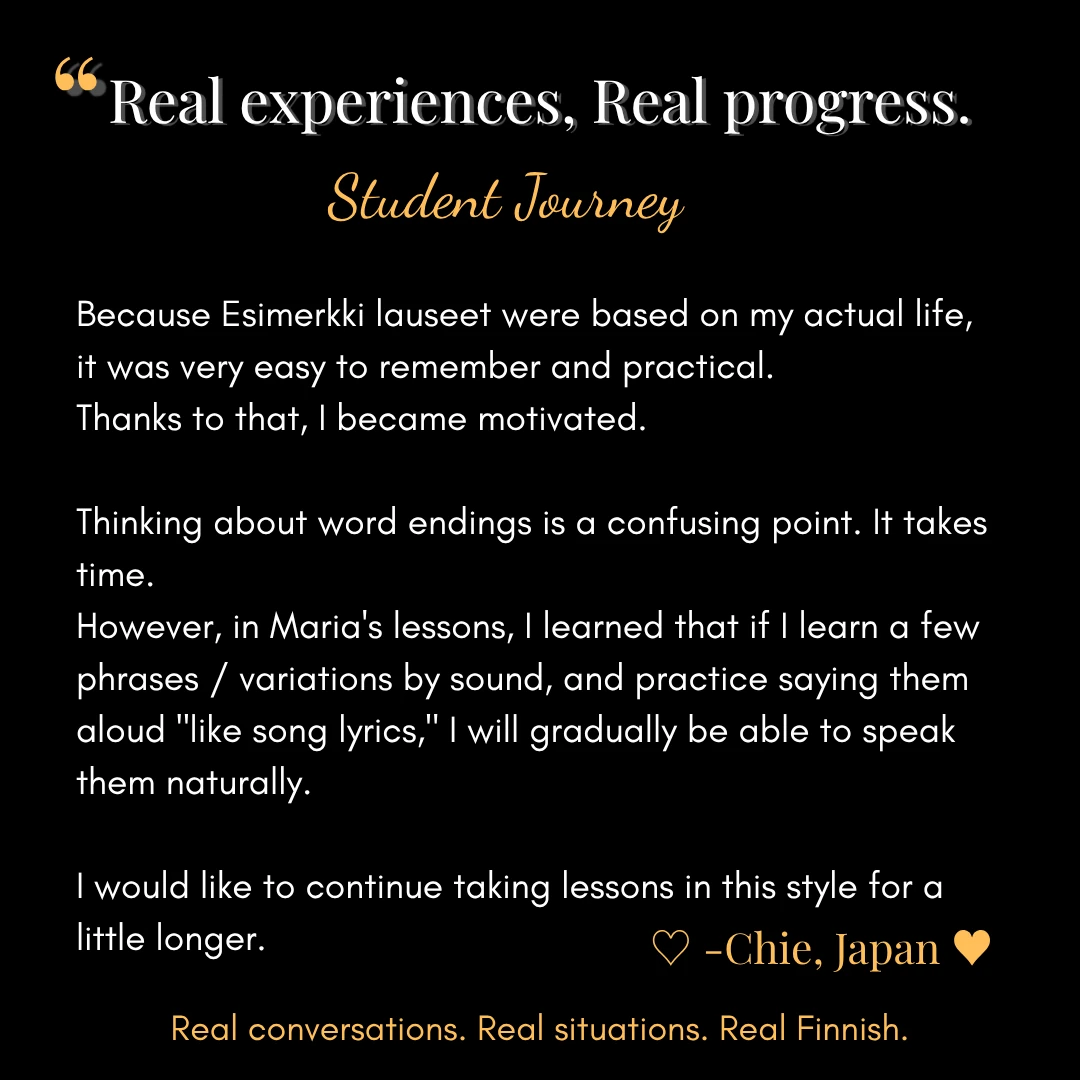
…in a more natural way, not memorised. For example, working through a situation like sitting in a café with a friend, makes forms such as kahvila-ssa feel intuitive, because it is directly linked to a situation. This kind of structured, context-based approach to grammar is built into every lesson and is what allows it to transfer naturally into speaking.
Pattern recognition and why it matters
During lessons, I guide learners to recognise patterns in Finnish. Instead of trying to remember individual forms (often from long lists), the focus is on noticing what repeats, what changes, and how meaning is built across different sentences and situations…(see more).
This allows the language to start organising itself naturally in your mind. In a short time, you will start asking the right questions and noticing the forms in everyday situations outside of classes also; signs, messages, advertising etc.
This leads to a more independent learning path where instead of relying on constant explanations or need to check the rules, you can begin to decipher them yourself. This pattern-based learning is a key part of how my lessons are built.
Finnish is logical
Finnish is always presented as a logical system. The lessons are designed to make the structure visible from the beginning (endings, patterns, logic)…(see more).
…so the language starts to feel predictable rather than confusing. Instead of approaching Finnish as something to memorise piece by piece, the focus is on understanding how ‘the system works’.
This is what allows Finnish to feel manageable and something that can be used with confidence, even at an early stage.
The aim is to make Finnish feel logical, usable, and something that can be spoken with confidence, even at an early stage.