Tag: Finnish grammar
-

🇫🇮 In Finnish, are you sometimes unsure whether you’re coming or going?
Finnish can make a very normal trip to the shop feel like a small navigation exercise. Are you in the shop, coming from the shop, going to the shop, or just popping out/in* and coming back? * see what I did there, ‘popping out’ to the shops, ‘popping round’ to my mates… If you are…
-

🇫🇮 The “problem” with Finnish…A Teacher’s Perspective
Finnish Is Precise – But Not Always when viewed through the lens of English This is a personal linguistic reflection on why Finnish can feel both extremely logical and extremely difficult to learn at the same time. Long read, if you only have a few moments to spare, I suggest to read sections “9. Finnish…
-
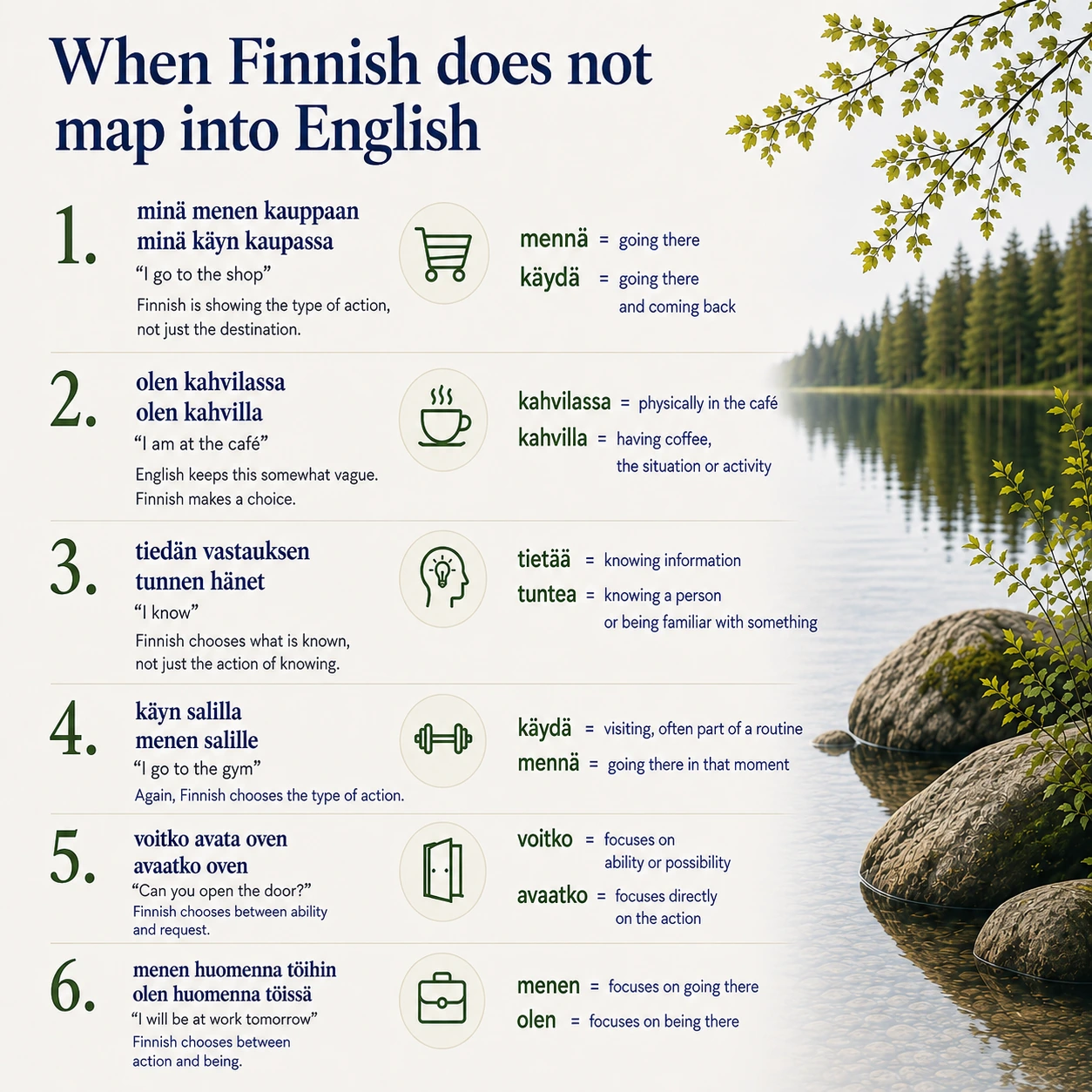
🇫🇮 Finnish does not map directly into English.
This does not come as a big surprise I guess, but let’s have a look at some examples 🙂 One of the reasons Finnish feels confusing at the beginning is simple: It does not map neatly into English. This is an important point to accept early on. Adult brains want to ask why, why, why.…
-
🇫🇮 When Finnish Starts to Make Sense: A Different Approach to Learning
For many learners, Finnish feels overwhelming at the beginning. The endings, the structure, the unfamiliar logic, it can seem like everything needs to be memorised before anything can be used. This is often where progress slows down. The approach here is different. The focus is not on collecting rules or building knowledge in isolation, but…
-
🇫🇮 Webinar: Finnish is not random, it is logical…
🇫🇮 Studying Finnish from textbooks can leave you feeling stuck, things might make (some) sense on paper, but the system often appears unclear. If you’re living in Finland (or planning to move), this free live webinar will show you how: Finnish is not based on guessing or memorising random patterns. It follows clear systems that…
-
🇫🇮 Top 10 Finnish Phrases (with Real-Life Meaning)
If you’re starting Finnish, it’s easy to feel stuck between textbook language and real-life conversation. These 10 phrases are simple, natural, and actually used in everyday situations — with clear explanations so you understand how they work, not just what they mean. 1. Moi / Hei Meaning: Hi / Hello Used in almost all everyday…